

Cocoa Powder Origin of Raw Materials
Main raw materials of natural cocoa powder ,Cocoa beans primarily grow in countries near the equator. West Africa (Ghana, Côte d’Ivoire, etc.) accounts for 70% of global production, South America (Ecuador, Brazil, etc.) accounts for 15%, Asia (Indonesia, Malaysia, etc.) accounts for 10%, and other regions account for 5%.
Cocoa Powder Production and Classification
Production:
The processing of cocoa beans typically begins with pressing to obtain cocoa butter. After which, the residual cocoa cake is ground into a powder.
Razvrstitev:
By pH value: Natural cocoa powder (5.0-5.8), Alkalized cocoa powder (Lightly alkalized: 6.0-6.8, Heavily alkalized: 6.8-8.0).
By fat content: Low-fat (4-8%), Medium-fat (10-12%), High-fat (20-24%). Among these, natural and alkalized cocoa powder with 10-12% fat content has the highest sales.
Main Characteristics
Natural Cocoa Powder:
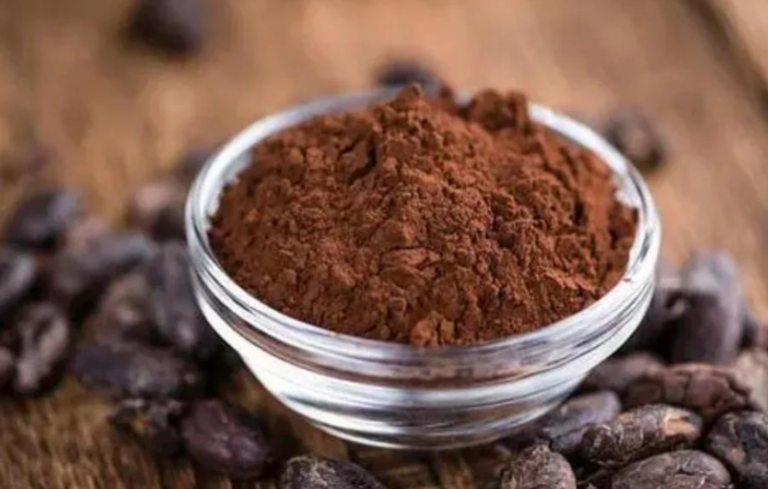
Light brown in color, with cocoa aroma and a sour/astringent taste. Fineness: 98%-99% pass rate through 200 mesh. Moisture: 5%, Ash content: 8%. Strict microbiological standards.
Alkalized Cocoa Powder:
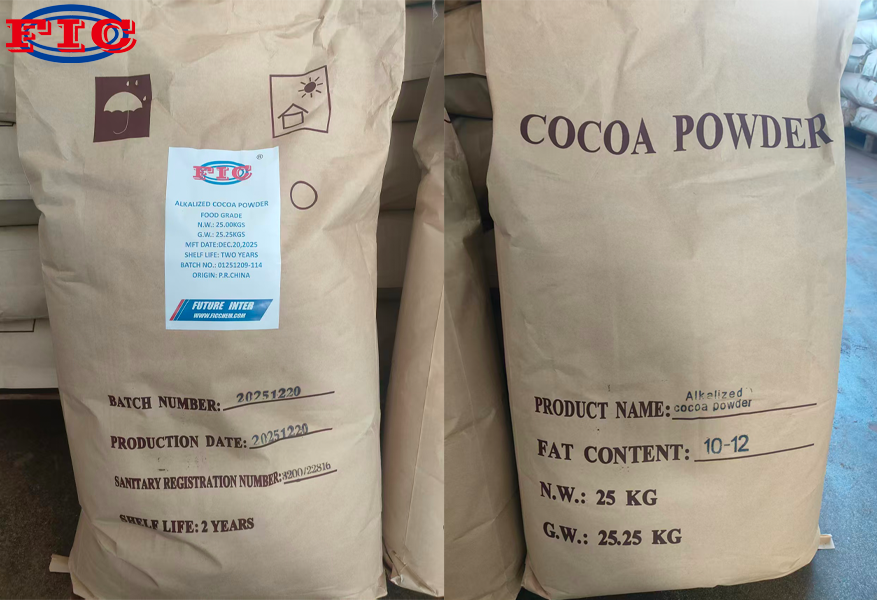
Milder taste (reduced sourness and bitterness), higher solubility, darker color (deep brown-red to reddish-brown). Favored by clients in the Middle East, South America, and Africa.
Application Scenarios
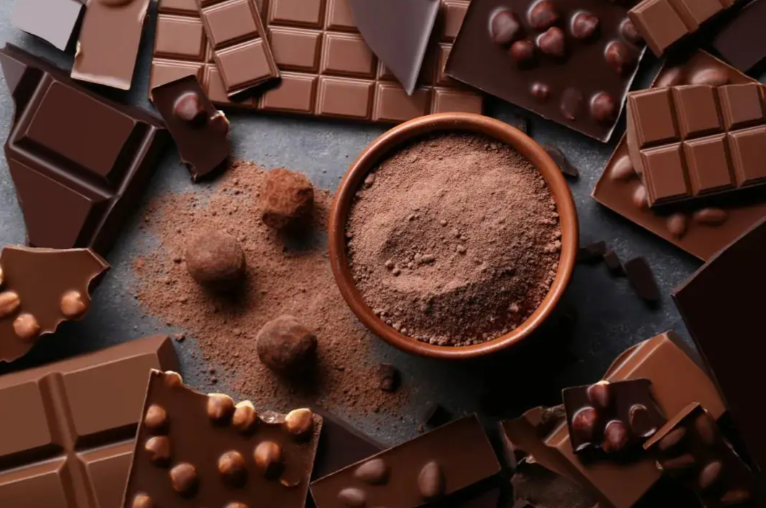
The baking industry widely uses alkalized cocoa powder in products like cakes and brownies. It also serves as a popular choice for coloring and decorating biscuits. In ice cream and dairy applications, this ingredient provides rich flavor without triggering undesirable acid-base reactions.
Packaging and Trade
Packaging:
Composite kraft paper bags with inner plastic liners, 25 kg per bag (gross weight 25.25 kg). 1 metric ton = 40 bags. Volume per metric ton: 1.64 cubic meters.
Shipping:
Small container (20ft): 16 tons (10 tons if palletized). Large container (40ft): 26 tons (20 tons if palletized).
Shelf Life:
2 years. Main export regions: North Africa, South America, the Middle East, Central Asia, etc.